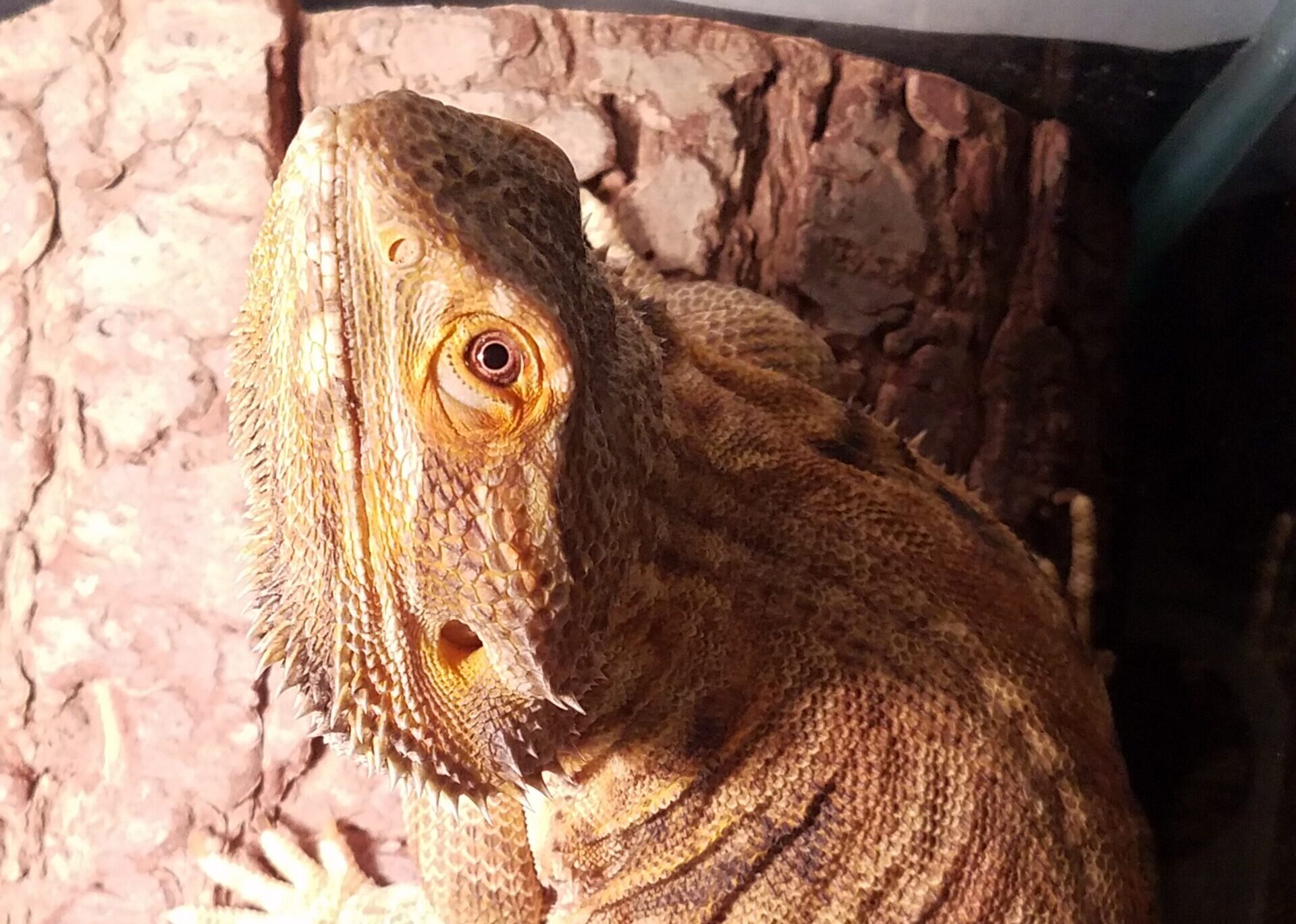


When it comes to what you should feed your beardie, and how often, here are some helpful tips to follow:
- Bearded dragon babies, juveniles, and adults all have different diets to follow, since they have different dietary needs for each stage of their lives. Babies typically require a diet consisting of 60% live foods (insects) and 40% greens/veggies. Once they reach adulthood these ratios will switch to 60% greens/veggies and 40% bugs. Young beardies will voraciously eat about twice a day, while adults will only eat once a day or every other day. Make sure your dragons always have food available every day regardless of whether or not they eat every time you offer food.
- Beardies require a stable source of protein, which is typically obtained through insects. Bearded dragons are normally not too picky and will eat crickets, mealworms, superworms, silkworms, or even roaches.

- Make sure that you get insects from a reliable source. Gathering bugs from outside is NOT a good practice. You may feed your lizard the wrong species of bug by mistake (and there are some that can be poisonous), or the bug may be carrying pesticides or parasites, which could make your pet ill.
- Bugs are a good source of protein, but they also contain chitin (part of what makes up the hard outer exoskeleton). Large amounts of this substance can lead to impaction (which basically means your beardie is constipated), which can potentially be fatal if the blockage does not pass. In order to avoid a build up of chitin and to optimize the amount of protein your dragon intakes, I would personally recommend that you make dubia roaches one of your main staples when it comes to protein. They have a good ratio of protein to chitin (more protein, less chitin) compared to a lot of other feeder insects out there, and they’re fairly easy to keep (see my post on the pros and cons of starting your own dubia roach colony for more info).

- Silkworms and Hornworms can also be used as a staple source of protein, however these both tend to be pricier options as they are harder to care for if you intend to raise your own as feeders.
- Beardies can also eat waxworms, but these are rather high in fat so these should only be given to your beardie as a treat (think of it like candy).

- The other main staple of you dragon’s diet are greens/vegetables/fruits. Leafy greens are the most important, since they can aid in calcium absorption, intake of nutrients, and hydration. I mainly feed my dragons either collard, mustard, or dandelion greens. Just make sure to rinse them and rip them up into pieces that are smaller than the space between the dragon’s eyes. Veggies should be thinly chopped and diced, small enough that they will not choke on them (no thick chunks, just assume your beardie may accidentally swallow a piece of food without chewing it… it happens all the time.) The same goes for fruit, but give these sparingly, due to the high sugar content (Beardies will want to fill up on colorful sweets before eating bland greens, even though the greens are more nutritious).

- Hydration. Hydration. Hydration. This is one of the main issues I face with my dragons. After owning my first reptile, I realized that some lizards do not actually “drink” water. They intake most of the water they need through the greens/fruits/veggies they eat. However, this may not be enough. If you notice that your beardie’s skin is starting to wrinkle, or if their eyes seem sunken in, they are probably dehydrated. In order to prevent this, I personally believe that it’s good practice to “soak” your lizard once a week (aka bath time). Even though some dragons will not drink from a water bowl, it is essential that there is always a clean, full water bowl on the cool side of their enclosure. This allows them the option to drink, or to crawl into the bowl and soak. When my dragons are in shed, I will usually soak them about twice a week to help remove the dry, dead skin.

- Bearded dragons still may not get enough nutrients from their food alone, so making sure to add powdered supplements to their diet is critical. Calcium is especially important. Normally, you should dust the insects you feed to your beardie at least 3 times a week with calcium, and about once a week with a multivitamin. RepCal makes both that you can buy online in small jars (make sure to get the one WITH D3). This will help prevent vitamin deficiencies that could lead to illnesses like MBD (Metabolic Bone Disease).

- Pellets are good as an addition to a diet, but NOT as a main staple food without any greens or insects. There’s just not enough nutritional content in most generic pellet formulas that are on the market.
- Lastly, variety is the key to a healthy and happy dragon, as it is with most pets. Would you want to be eating those same dry pellets or greens every day for months? I think not! Mix it up! I will alternate which kinds of veggies I give them every other day or so, and the same goes for their protein source. The occasional fruity treat never hurts, either!
Bon Appetit!